
Situations That Demand Stainless Steel Hydraulic Fittings
When Only Stainless Steel Will Do
Hydraulic systems work hard all year, but they feel the strain when conditions get colder, wetter and harsher. When maintenance windows are short and equipment is running flat out, the small parts start to matter a lot. A leaking fitting or corroded clamp can stop production, cause safety issues and trigger call-outs that nobody has time for.
That is why material choice in hydraulic fittings is so important. It is not just about getting the right size and thread. The metal itself affects uptime, safety and total cost over the life of the machine. Stainless steel hydraulic fittings are not always the cheapest option, but in certain high-risk or high-value spots they are a smart upgrade, not a luxury. Used in the right places, they protect people, plant and production.
We see this every day supplying hydraulic pipeline components across the UK. Our view is simple: stainless is the right answer when conditions demand it, and there are other suitable options when they do not. The skill lies in knowing the difference.
Corrosive Environments That Destroy Standard Fittings
Some settings are simply hostile to standard carbon steel fittings. Corrosion does not just make things look untidy, it eats into threads, seats and sealing faces, and that is when leaks start.
Typical corrosive environments include:
Offshore and marine equipment
Coastal sites and ports
Chemical and petrochemical plants
Salt gritted road environments
Winter service and snow control fleets
In these locations carbon steel and low-grade alloys can suffer from:
Pitting corrosion from salt spray and aggressive media
Crevice corrosion around threads, clamps and seals
Galvanic attack where dissimilar metals are mixed
As corrosion bites, fittings lose wall thickness and thread strength. What started as a light orange bloom can turn into seized joints, weeping connections, unexpected bursts and long repair jobs. It also makes routine maintenance harder because fittings are more likely to round off or break when you try to move them.
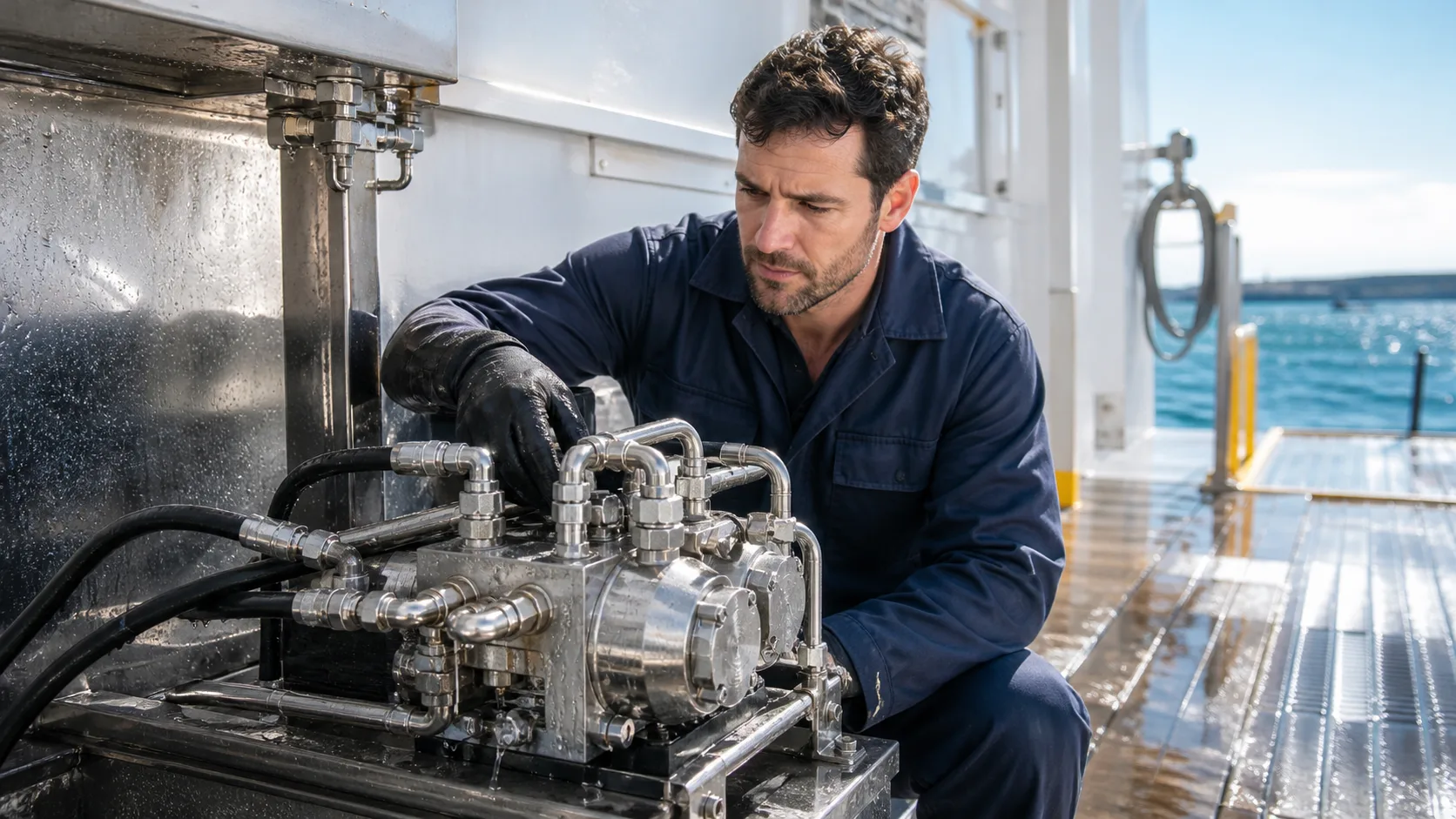
Stainless steel hydraulic fittings are often mandatory in these situations because they offer far better resistance to salt, chemicals and constant humidity. They stand up to:
Long-term salt spray on offshore wind assets and marine cranes
Damp, corrosive air around ports and coastal energy sites
Fertiliser dust and liquids in agricultural handling kit
Chemical dosing lines and washdown areas in processing plants
By holding their integrity for longer, stainless fittings help keep safety systems functioning, pressure lines sealed and inspections more straightforward.
High-Pressure, High-Stakes Hydraulic Systems
Some hydraulic circuits simply cannot be allowed to fail. When fittings are part of a safety function or sit close to people, the risk level jumps.
High-stakes applications often include:
Lifting operations and load holding circuits
Braking and steering systems on mobile plant
Safety interlocks and overload protection circuits
High pressure lines running near walkways or work areas
These circuits see constant pressure cycling. Shock loads, vibration and wide temperature swings through autumn and winter all add to the stress on metal. Standard fittings can be pushed close to their limits under these conditions, especially as they age or if minor surface damage turns into a crack.
High grade stainless steel fittings keep their strength for longer and resist crack growth better under dynamic loads. This matters where:
Design standards specify stainless for specific functions
OEM documentation calls for stainless in defined circuits
Insurance or site rules set material requirements around personnel areas
In these cases it is not really a choice, it is a compliance issue. A specialist supplier can help you understand where stainless is effectively mandatory and how to match fittings, clamps and accessories so that the whole assembly meets those obligations.
Hygiene-Critical and Cleanroom Operations
In many industries, a small hydraulic leak is not just a tidy-up job, it is a contamination event. Here, hygiene and cleanliness are just as important as sealing pressure.
Typical hygiene-critical areas include:
Food and beverage processing
Dairy and CIP systems
Pharmaceutical and biotech production
Clean manufacturing and packaging lines
Stainless steel is widely used in these sectors because its smooth surface is easy to clean and hard for bacteria to cling to. It stands up to:
Frequent washdown with hot water and detergents
Disinfectants and cleaning chemicals
Regular cleaning-in-place cycles around exposed pipework
When hydraulic fittings, adapters and clamping systems are also stainless, they fit better into hygienic design. This helps to:
Reduce product contamination risk from flakes, rust or oil
Minimise residue build-up around clamp points and joints
Avoid odour tainting from trapped fluids or corroding parts
Buyers in these sectors often expect stainless materials, hygienic layouts and clear traceability on components. Specialist fittings and clamps designed for these settings can support compliance with relevant hygiene standards and site rules.
Extreme Temperatures, Outdoor Duty and Seasonal Stress
Outdoor machinery has a hard life. Temperature swings, frost, UV, rain and dirt all attack hoses, clamps and fittings, especially on exposed parts of the system.
Problem areas often include:
Mobile plant that lives outside
Agricultural machinery in year-round use
Snow and ice equipment in road fleets
Construction equipment and energy infrastructure
Standard plated fittings can suffer coating breakdown over time. Once the outer layer starts to fail, corrosion follows, especially where salt and moisture are present. In cold weather, embrittlement and hard impacts can speed up cracking.
Stainless steel fittings perform well at both low and higher temperatures without relying on a coating for protection. That means:
No flaking or peeling finish that can contaminate nearby systems
More stable mechanical properties in cold snaps
Better resistance to long-term UV and weathering on exposed joints
Upgrading to stainless in the most exposed or hard-to-reach locations can:
Extend service intervals
Simplify winter preparation work
Reduce emergency call-outs for burst lines and failed fittings
The idea is not to change everything to stainless, but to target those fittings that carry the most risk if they fail in bad weather.
Choosing the Right Stainless and Working with a Specialist
Not all stainless steels behave the same. Picking the right grade for the media, pressure and temperature is important.
In broad terms:
304 stainless is widely used where corrosion risk is moderate
316 stainless offers better resistance in marine and chemical settings
Higher alloy or specialist grades may be needed for very aggressive media or extreme temperatures
It is also important to think about the whole hydraulic system, not just individual fittings. To get the best result you should aim for:
Material compatibility between fittings, pipe clamps, hoses and flanges
Careful selection of sealing types and coatings to limit galvanic corrosion
Consistent quality across all components to keep joints leak-free
As a supplier focused on hydraulic pipeline components, we support engineers by helping to:
Review applications and identify high-risk circuits
Select appropriate stainless fittings, hoses, clamps and accessories
Plan upgrades around maintenance windows
Share guidance on installation and tightening practices
A simple audit before the weather turns colder can highlight vulnerable areas where stainless steel hydraulic fittings are justified by safety, reliability and lifecycle costs. By treating stainless as a strategic tool rather than a blanket rule, you can protect your assets where it matters most and keep your hydraulic systems running with fewer surprises.
Get Started With Your Project Today
If you need reliable performance in demanding environments, our stainless steel hydraulic fittings are engineered to deliver long-term resilience and safety. At Stauff Anglia, we work closely with you to match the right components to your exact specifications, helping to reduce downtime and maintenance costs. Share your application details and we will recommend a tailored solution that fits your project and budget. If you are ready to discuss requirements or request a quotation, please contact us.
Visit the Stauff Anglia Ltd website for more information on Situations That Demand Stainless Steel Hydraulic Fittings
ENQUIRY FORM


