
Designing Hydraulic Tube and Fittings Layouts for Retrofit Projects
Retrofit Hydraulic Layouts That Deliver Long-Term Reliability
Retrofitting hydraulic tubes and fittings into an existing plant is never as simple as copying what is already there. Older pipe runs, tight access and equipment that cannot be moved all put pressure on the design. If the layout is not thought through, the result is usually more downtime, nuisance leaks and hard-to-reach fittings that nobody wants to maintain.
A well-planned tube and fittings layout does the opposite. It makes the system safer to work on, protects components from stress and vibration, and helps keep production running, especially when the weather turns colder and stoppages are harder to recover from. In this article, we will look at practical ways to plan retrofit layouts that last, from first site survey through to final pressure test.
At Stauff Anglia, we spend our time supporting OEMs, maintenance teams and retrofit specialists across the UK with hydraulic pipeline components. That means we see what works, what fails early and where a little extra planning would have saved a lot of trouble.
Assessing Existing Systems Before You Touch a Spanner
The best retrofit jobs start long before old tube is cut out. A structured site survey gives you the facts you need so the new layout is an upgrade, not just a replacement.
Key things to record include:
Existing tube sizes, wall thicknesses and materials
Fitting types, threads and connection standards already in use
Current routing, bend radii and clamp or support positions
Operating pressures, temperature swings and duty cycle
Areas exposed to weather, washdown, chemicals or heavy dirt
As you walk the line, it pays to look for weak points, not only obvious failures. Keep an eye out for:
Corroded or pitted tubes, especially under old clamps
Adapters chained together where one correct fitting should do
Long, unsupported spans that move when the system is cycled
Hoses doing the job of fixed pipework because it was “quicker at the time”
These small signs often show where the system has been patched over the years and where stress, vibration or movement are building up. Those are the spots to redesign rather than copy.
Good coordination with production and maintenance teams is just as important as the technical checks. Agree:
When access will be possible
Which lines can be shut down together
Safety rules for working at height, in pits or near hot surfaces
This planning keeps the retrofit within agreed windows and reduces the risk of rushed assembly as an outage comes to an end.
Choosing the Right Hydraulic Tubes and Fittings for Retrofits
Once you understand what is in place, the next step is selecting hydraulic tubes and fittings that will work well in that environment for years to come. Pressure rating is only one part of the story. You also need to think about:
Temperature swings from cold start-up to full load
Media type, including any additives that might attack certain metals
Exposure to moisture, road salt, chemicals or cleaning agents
Mechanical damage risk from traffic, tools or falling parts
Tube material and wall thickness should be chosen with all of this in mind. For tougher conditions, a slightly heavier wall or a more resistant material can give a lot more margin without changing the basic line size.
Retrofit work often means tying modern components into legacy systems. With the right mix of adaptors, flanges and hose-to-tube transitions, you can:
Bring older sections up to a current standard step by step
Keep downtime low by matching existing interfaces
Reduce the need for improvised fittings that are hard to replace later
Standardising on proven, quality-assured components from a trusted supplier has long-term benefits. It simplifies:
Spares holding, as fewer part types cover more of the plant
Training, since fitters know the products and tools
Planned work ahead of winter and other busy seasons
At Stauff Anglia we focus on hydraulic pipeline components for exactly these reasons, helping teams choose combinations that are both technically sound and practical to maintain.
Routing, Clamping and Noise Control in Confined Spaces
Routing in retrofit projects is often the hardest part, especially in older UK plants where space is tight and access is awkward. A sensible layout balances neatness with the need to get spanners and test equipment onto critical fittings in the future.
Good practice includes:
Avoiding sharp bends and keeping to recommended bend radii
Keeping hoses as short as practical and using tube where possible
Leaving space around valves, filters and gauges for safe access
Keeping pressure lines away from high heat or moving parts where you can
Support is as important as routing. The right choice of pipe clamps and sensible support spacing can cut vibration and noise, which also reduces fatigue failures on ageing machinery running for long hours. When clamping, think about:
Clamp type, including inserts that suit the tube material
Spacing, so spans do not whip or resonate
Grouping lines together for a tidy, stable run
Working around existing cable trays, structural steel and other services takes a bit of creativity. Compact clamp systems and modular supports let you share structure without crowding. Stacking clamps, for example, can carry multiple lines in a very small footprint while still giving each tube proper support and separation.
Avoiding Common Retrofit Pitfalls During Installation
Even the best design can be let down by poor installation. Retrofit sites are often dirty, cramped and under time pressure, which makes discipline even more important.
Common mistakes to guard against include:
Misaligned tube runs that pull fittings out of line as they are tightened
Overtightened fittings that damage threads or seals
Undertightened fittings that appear fine at low pressure, then weep on full load
Skipping cleaning, flushing and proper contamination control
Using the right tools and processes helps keep quality consistent. That usually means:
Clean, square cutting of tube with suitable saws or cutters
Deburring inside and outside edges before forming or pre-assembly
Correct pre-assembly of bite-type or forming fittings
Torque control where the fitting type calls for it
Once installation is complete, testing is not the place to cut corners. Pressure and leak testing, carried out to an agreed procedure, will prove:
Joints are sound at working pressure
Supports are taking the load without unexpected movement
Any layout changes are safe and stable
Take time to record as-built layouts and any changes from the original plan. Clear records help with future troubleshooting and upgrades, especially when the plant is under high demand during colder periods and downtime is harder to find.
Partnering with Specialists to Future-Proof Your Retrofit
Hydraulic retrofits touch safety, reliability and maintenance workload for years to come. Having a technical partner involved early in the planning helps validate tube sizing, routing and selection of fittings before any metal is cut.
A specialist supplier of hydraulic pipeline components can support with:
Helping choose tubes, fittings, flanges and adaptors that work together
Reviewing proposed layouts, including CAD-based routing where needed
Recommending clamp types and support systems suitable for your environment
Supplying parts quickly across the UK so projects stay on schedule
At Stauff Anglia, hydraulic tubes and fittings are our daily work, along with pipe clamps, tube connectors, hoses, adaptors, flanges and accessories for industrial fluid power systems. Working with maintenance teams, OEMs and retrofit specialists, we focus on giving practical, technically sound solutions that stand up to real plant conditions, from preparation through to long-term operation.
Get Started With Your Project Today
For reliable performance and a precise fit, choose our high-quality hydraulic tubes and fittings tailored to your specific application. At Stauff Anglia, we work closely with you to ensure every component meets your technical and operational requirements. If you would like guidance on selecting the right solution or placing an order, simply contact us and our team will be happy to help.
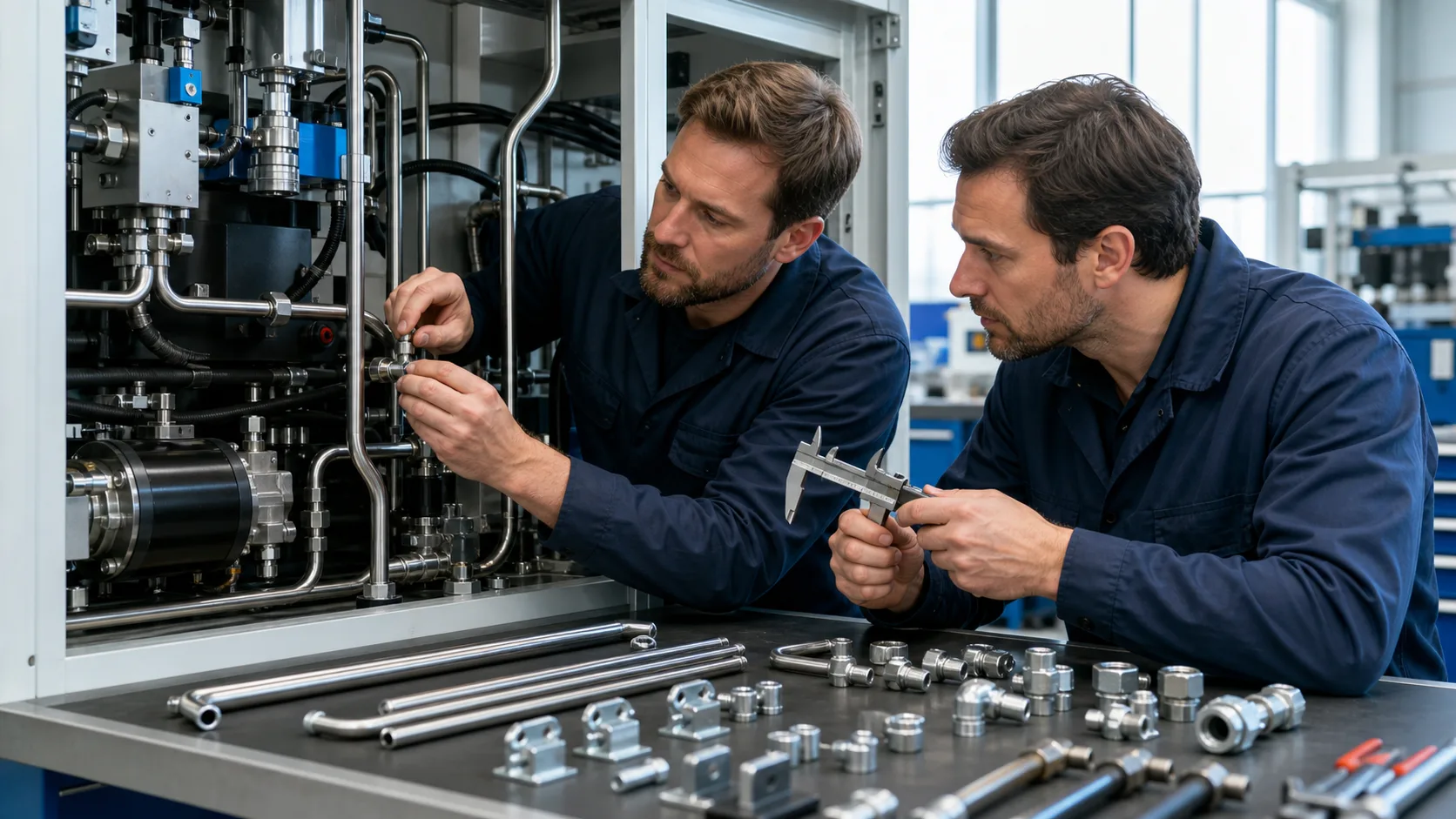
Visit the Stauff Anglia Ltd website for more information on Designing Hydraulic Tube and Fittings Layouts for Retrofit Projects
ENQUIRY FORM


