How to handle steel drums safely in a warehouse
Best practice, handling equipment and safety guidance for efficient warehouse drum operations
The safest way to handle steel drums in a warehouse is to minimise manual handling and use secure mechanical lifting equipment such as forklift-mounted drum attachments. This reduces injury risk, prevents spillage and improves operational efficiency. The appropriate method depends on drum weight, how frequently it is moved and the warehouse storage layout.
Open or closed (tight head) steel drums are widely used across manufacturing, chemical processing, logistics and warehousing because they are durable, stackable and suitable for hazardous materials. However, their weight and rigid construction mean they require careful handling to avoid injury, product loss or regulatory breaches.
Understanding the risks and choosing the right equipment is essential for maintaining both safety and throughput in a busy warehouse environment.
Why steel drums require specific handling methods
Steel drums differ significantly from plastic or fibre drums in both structure and handling requirements. A standard 200-litre steel drum can weigh over 250kg when filled, depending on its contents. The steel body provides durability and impact resistance, but it also means:
The drum is heavy and difficult to manoeuvre manually
Dents can compromise seals or lids
Rolling requires stable, even flooring
Many drums contain hazardous, flammable or environmentally sensitive substances.
Unlike lightweight containers, steel drums cannot be treated as general manual handling items. Their size and weight increase the risk of strain injuries, crush hazards and instability during movement.
Where drums are stored in racking systems or moved frequently between goods-in, storage bays and areas, mechanical assistance becomes necessary. Read more about safe drum handling for 200-litre drums.
What are the risks of handling steel drums incorrectly?
Incorrect drum handling remains a common cause of warehouse injuries. The risks increase when manual methods are relied upon in environments designed for high throughput.
The main hazards include:
Manual handling strain
Lifting, tilting or attempting to steady a full steel drum can exceed safe manual handling limits. Repetitive strain injuries and lower back injuries are common where mechanical assistance is not used.
Rolling instability
Steel drums are often rolled along their rim for short distances. However, this method reduces control. On uneven or contaminated flooring, drums can veer off course, collide with racking or strike operators.
Crush and pinch points
Hands and feet are vulnerable during tilting and positioning. A partially controlled drum can trap fingers against walls, pallets or adjacent drums.
Leakage and environmental risk
Improper lifting or dropping can damage seams or lids. Where drums contain chemicals or flammable liquids, this creates safety hazards and potential regulatory consequences.
Drum handling regulations
Under the UK Manual Handling Operations Regulations, employers must reduce manual handling risk so far as reasonably practicable. In many warehouse environments handling steel drums regularly, this means assessing mechanical handling options and keeping them under review.
What handling methods are available for steel drums?
There are two broad categories of drum handling methods in warehouses: manual equipment and mechanical equipment.
Manual methods
Common manual solutions include:
Rolling the drum
Tilting and pivoting
Drum trolleys
Drum dollies.
These methods may be suitable for:
Low-frequency movement
Short travel distances
Light-duty environments.
However, manual solutions have clear limitations. They increase operator effort, reduce control and are not suitable for lifting drums into racking or moving them over longer distances.
Mechanical handling equipment
Mechanical handling significantly reduces manual strain and improves control during lifting and transport. For warehouses already operating forklifts, drum attachments integrate directly into existing material handling processes.
Pedestrian drum handling equipment provides added support and safety for manual drum handling, and includes:
Pedestrian drum handlers
Pedestrian drum rotators
Lightweight mobile drum carrier
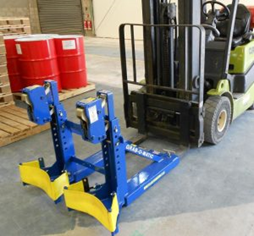
Forklift-mounted drum grabs attach to the forks of trucks and allow the operator to work from the protection of their cab during lifting and moving operations. Forklift drum attachments are available in a range of configurations, including:
Rim-grip attachments
Waist-grip attachments
Multi-drum handlers
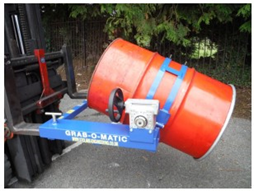
Drum rotators for dispensing drum contents.
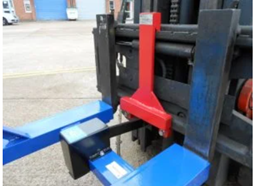
Further protection and efficiency can be added through use of a quick-release drum handling system, allowing the forklift operator to secure the drum grabs to their vehicle and perform drum moving operations without leaving the cab.
What is the safest method for warehouse environments?
The safest approach depends on operational context. The following criteria should guide decision-making:
Frequency of movement
High-volume environments require equipment that supports repeated lifting without increasing operator fatigue.
Distance travelled
Longer distances increase instability risks when using manual methods.
Weight of contents
Heavier drums require secure gripping and controlled lifting.
Racking height
Where drums are stored at height, forklift-based solutions are essential.
Hazard level
Drums containing flammable or chemical substances demand maximum stability and minimal manual contact.
In most medium- to high-volume warehouse environments, forklift-mounted drum attachments provide the safest and most efficient solution, particularly where drums are stored in racking or moved frequently.
Manual handling vs forklift drum attachments
Choosing between manual drum handling methods and forklift-mounted attachments should be based on operational risk, handling frequency and storage configuration rather than initial equipment cost alone.
Manual aids such as drum trolleys can be appropriate for low-frequency movement over short, level distances. However, where drums are heavy, moved regularly or stored in racking, mechanical lifting provides greater control and reduces exposure to manual handling risk.
The comparison below outlines the practical differences in performance and suitability for typical warehouse conditions.
Factor Manual handling methods Forklift drum attachment
Operator strain Higher physical effort Minimal manual strain
Control during lifting Limited, operator-dependent Secure mechanical grip
Suitability for racking Not suitable Designed for vertical placement
Stability in transit Reduced control when rolling Controlled, balanced transport
Throughput efficiency Slower for repeated tasks Faster, consistent handling
Risk exposure Greater reliance on operator strength Reduced manual handling exposure
For occasional repositioning of empty or lightly loaded drums, manual aids may be adequate. In most warehouse environments handling full steel drums regularly, mechanical attachments provide a safer and more controlled method of movement.
How to choose the right drum handling attachment
Selecting the correct drum handling attachment for your forklift truck depends on several factors.
Drum type
Closed-head steel drums are typically suited to rim-grip attachments, while certain configurations may benefit from waist-grip mechanisms.
Single or multiple drums
Some warehouses require handling of multiple drums simultaneously to improve throughput. For example, open top steel drums can be lifted using a twin-head gripper.
Load capacity
The attachment must match both drum weight and forklift capacity.
Warehouse layout
Narrow aisles, racking systems and turning space influence equipment choice.
Operational volume
Higher throughput environments justify more robust mechanical solutions.
Secure gripping is critical. Attachments designed specifically for steel drums reduce the risk of slippage or imbalance during lifting and transport.
Steel drum storage and stacking considerations
Safe handling does not stop at lifting, as storage arrangements influence overall risk. Key considerations include:
Pallet stability
Racking compatibility
Bunded areas for hazardous substances
Spill containment measures
Fire separation requirements
Even floor surfaces.
Where drums are stored in racks, mechanical lifting solutions improve placement accuracy and reduce impact damage.
Combining correct storage practices with appropriate lifting equipment creates a safer and more efficient warehouse environment.
Improving safety and efficiency in steel drum handling
Safe steel drum handling relies on using equipment designed for the task. Where drums are heavy, moved frequently or stored in racking, secure forklift-mounted attachments provide greater control, reduced manual strain and improved operational consistency.
St Clare Engineering specialises in drum handling attachments built specifically for demanding warehouse environments. Our rim-grip, waist-grip and multi-drum solutions are engineered to deliver secure lifting, controlled movement and long-term reliability.
If your warehouse handles steel drums regularly, it may be time to review whether your current method offers the safest and most efficient approach.
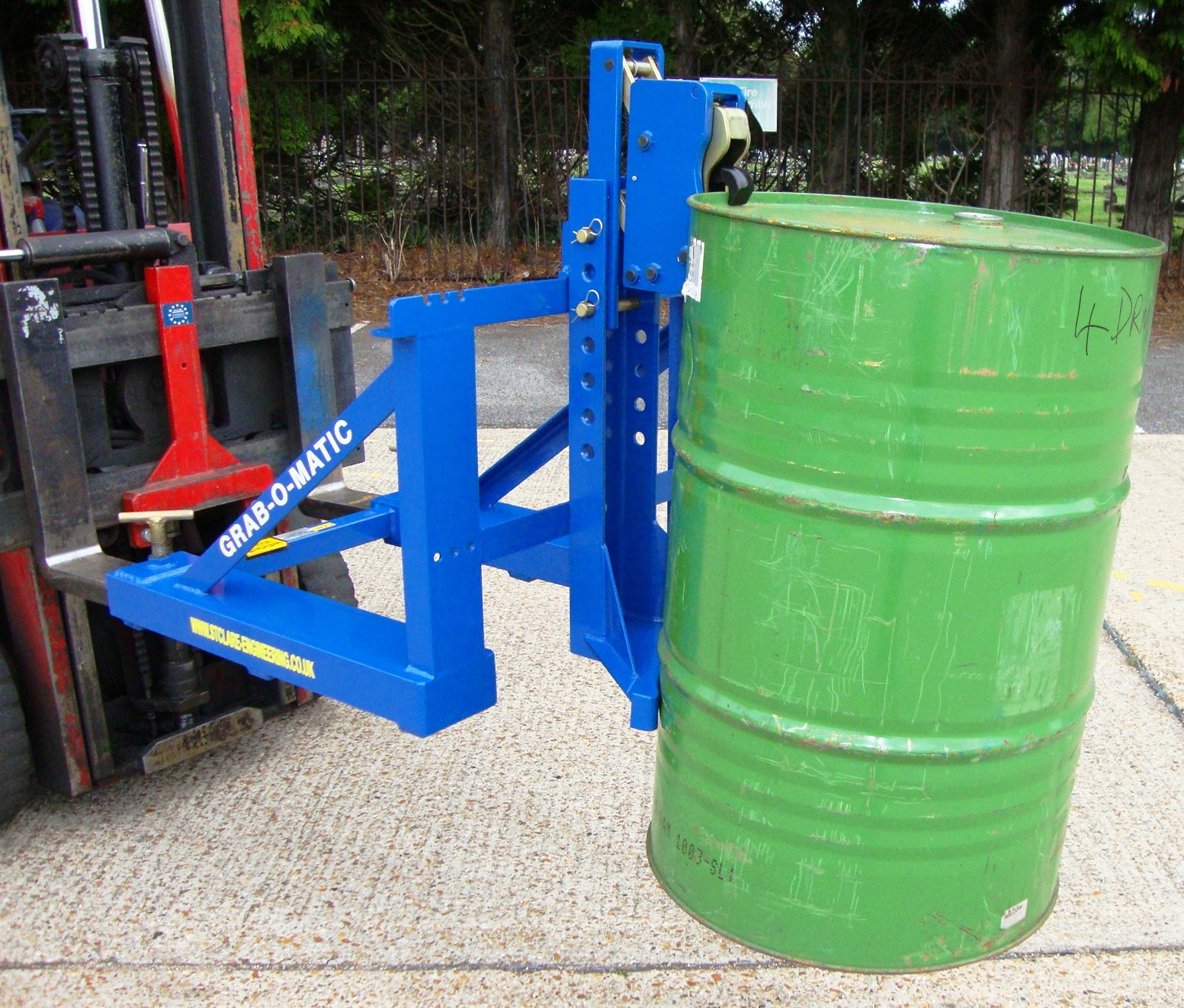
Visit the St Clare Engineering Ltd website for more information on How to handle steel drums safely in a warehouse
ENQUIRY FORM